Picture a Filipino family dinner, your nanay notices your kapatid has been quiet lately, but your tatay waves it off, “Wala namang problema ‘yan, pagod lang.” Mental health stigma lives in moments like this: a polite silence that closes the door on a difficult truth.
The Philippine Mental Health Association identified that around 3.6 million Filipinos live with a mental health disorder, neurological condition, or substance use disorder, based on a Manila Bulletin news article, and most never reach a doctor. This blog explores why mental health is stigmatized, how public stigma sustains the silence, and how a small private gesture can begin the shift.
Why Does Mental Health Stigma in the Philippines Still Persist?
The situation with mental health in the Philippines happened due to multiple factors. It is a tangle of cultural patterns, negative attitudes, and inherited negative stereotypes. Unfortunately, these factors are the reasons why people do not pursue professional help.

Hiya and the Culture of Saving Face
Often described as the deep Filipino sense of shame, hiya shapes how families respond to mental illness. Admitting a son or daughter sees a psychiatrist or admitting to your parents that you are struggling can feel like exposing a family flaw to neighbors and relatives. Fear of judgment often outweighs the urgency of treatment.
Furthermore, many patients describe putting off their first consultation for months or years because they worry about the prejudice and derogatory terms whispered behind their back. This is a social stigma about mental health: nobody insults you, but nobody asks either.
Religiosity and Spiritual Framing
Filipino culture often reads emotional struggle through a spiritual lens. Phrases like “manalangin ka lang,” “kapit lang,” or “lakas ng loob” frame depression and anxiety as tests of faith rather than treatable mental health conditions.
This framing is meant to comfort, but it also delays treatment. When a young adult with a serious mental illness like bipolar disorder hears that prayer is the answer, the visit to a mental health doctor gets postponed. Faith and treatment are not enemies, but for many families, religion is offered as a replacement for professional help rather than alongside it.
“Tibay ng Loob” and the Stoic Standard
There is a quiet expectation in Filipino households that strength means silence. Tibay ng loob, or inner toughness, is praised. Emotional openness is treated as weakness, which is instilled at an early age in Filipino families.
This is structural stigma at the household level. It teaches young people that mental health challenges should be carried alone, away from any supportive environment. The patient who finally seeks help often fights both the illness and the voice telling them to be tougher.
Family Privacy and the Closed Door
Filipino families often handle problems internally. “Wag mong sabihin sa iba” is a common refrain. The idea protects the family’s image, but it isolates the person who needs help most.
Closed doors are rarely meant to harm. It is generational silence learned across decades, and it makes mental health treatment in the Philippines feel like a betrayal of family loyalty. Mental health stigma in society stays durable when walls built with care become impossible to breathe behind.
Three Forms of Mental Health Stigma Filipinos Face
Mental health stigma in the Philippines is not one wall. It is three walls working at once, with mental illness stigma compounding across each level. Researchers call them public stigma, structural stigma, and self-stigma, and each one blocks a different path to mental health care.

- Public Stigma: Society itself creates public stigma. It shows up in derogatory terms whispered behind a patient’s back, in negative stereotypes about people with mental illness, and in fear of discrimination from neighbors, employers, and extended family. Social stigma about mental health makes seeking professional help feel costlier than staying silent.
- Structural Stigma: The Philippines has fewer mental health workers than the region’s median, fewer accessible clinics outside Metro Manila, and very limited insurance coverage for mental health services. Such structural gaps mean even motivated patients face barriers their wealthier counterparts do not. The system is not built for them, even when it is built for their physical health.
- Self-Stigma: Patients turn the stigma inward through self-stigma. After enough public stigma soaks in, a patient internalizes the message. They may believe they are weak, broken, or a burden to their family. Self-stigma drives social isolation, delayed treatment, and the feelings of shame that keep patients silent even around people who would help.
For someone living with a serious mental illness, that silence can become its own diagnosis. Stigma reduction at this level only works when someone else moves first.
Identify the common mental health conditions to know that you can seek help from mental health specialists.
The Cost of Silence: What Untreated Mental Illness Costs the Filipino Families
Measurable consequences follow the stigma on mental health here. More than 1.1 million Filipinos live with major depressive disorder according to DOH data. Young Filipinos face rising rates of anxiety disorders, burnout, and substance use that disrupt everyday life and erode physical health.
A financial wall makes it worse. One therapy session in the Philippines typically costs PHP 1,500 to PHP 5,000, and most patients need consistent visits over months. For a family earning the median household income, sustained therapy can stretch the budget past its breaking point.
Many patients begin treatment with hope, then quietly drop out of mental health services when the bills add up. Therapy interrupted is therapy lost, and social isolation often follows when the cycle resets. Each dropout signals the country’s mental health outcomes moving the wrong way.
Explore affordable online psychiatrist options that lower the cost barrier for patients.
Why Small Private Actions Move Culture More Than Big Public Ones
National campaigns help. World Mental Health Day posts on social media help. But the deepest cultural shifts often start in private rooms, not on public stages.
A daughter who quietly pays for her father’s first counseling session can change a family pattern that has lasted generations. When a friend messages “I noticed you have been off, I am here,” it can break a silence that ten public service announcements never reached. One patient assisting another patient through a health gift card can turn a community of strangers into a community of survivors.
These small acts do the cultural work that broader campaigns rarely finish. They do not lecture or perform. Instead, they challenge stereotypes and drive stigma reduction, opening a door and letting the person decide when to walk through.
NowServing Care Gift Card as a Quiet Rebellion Against The Stigma on Mental Health
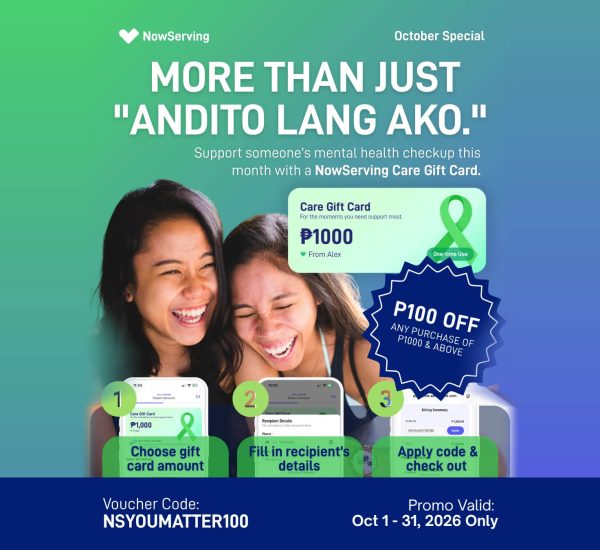
We built the NowServing Care Gift Card for these small private acts.
It lets you fund mental health treatment for someone you care about without forcing a confrontation. You do not have to find the perfect words or ask invasive questions. Send a gift card, let them use it, and the conversation can happen later, on their terms or not at all.
For mental health patients, the gift card removes the financial wall. Families get a door that opens without barging through it. Friends get a way to offer support with positive impact, without overstepping or invading too much privacy. That shift quietly rebels against decades of stigma, giving the recipient room to browse psychiatry specialists near them on NowServing when ready.
This act can help change perception in mental health, and bring acceptance to the society that these are illnesses, which can be managed and treated like a physical condition.
Read and know about the origin of this new product from NowServing in this blog.
How to Send a NowServing Care Gift Card for Mental Health Care
Sending a gift card using the NowServing app is intentionally simple, so the giver does not have one more reason to hesitate.
Follow these steps:
- Open the NowServing app and tap the Care Gift Card banner.
- Fill out their info: mobile number and name. Email, a personal note, and a suggested doctor are optional.
- Select the amount: P1,000, P1,500, P2,000, or a custom amount. You can also cover the P275 service fee so they get the full gift.
- Review the details and pay.
Recipients get notified via SMS that their gift card is ready for redemption. It is inside the “My Wallet” of their NowServing account. They can book a psychiatrist for medication-related treatment, schedule a session with a psychologist, pay for follow-ups, or book a psychological assessment for deeper evaluation. NowServing also has doctors for anxiety and stress.
NOTE: Patients can only use the NowServing Care Gift Card for mental health related consultations for now. Stay tuned for next updates for future use of the gift card for outside of mental health consultations.
Who Should You Consider Gifting a One-time Use Care Gift Card To
The gift card is built for all Filipino patients, but you can also consider these three audiences, each carrying a different weight in someone’s mental health journey.
- Fellow patients: Someone in your support group who mentioned they had to pause therapy. A friend you met in an online community who shared they cannot afford this month’s session.
- Family members showing signs of strain: The adult child who has gone quiet or your sibling who’s sleeping too much or too little. A parent whose burnout has been called pagod for too long.
- Friends who have been carrying too much alone: The one who replies “I am fine” too quickly or that person who needs an opened door, not a forced conversation.
You do not need a diagnosis to gift it. All you need is the instinct that someone you care about could use one less wall between them and care.
Frequently Asked Questions About Mental Health Stigma in the Philippines
How common is mental health stigma in the Philippines today?
Mental health stigma today affects most Filipino households despite years of mental health awareness work. Reports from the Department of Health and the World Health Organization show that a majority of Filipinos with diagnosable mental health concerns never receive professional help, often because of fear of discrimination, feelings of shame or hiya, and a lack of understanding from family members. The Philippine Mental Health Association has called the gap a public health crisis.
What factors hinder Filipinos from getting mental health treatment?
The biggest factors are cost, mental illness stigma, religious framing of mental health issues, family privacy norms, and the cultural expectation of tibay ng loob. Cost alone disqualifies many patients, which is where the NowServing Care Gift Card helps.
Can the NowServing Care Gift Card be used for any mental health condition?
Yes. The gift card can be used to seek professional help to manage mental health conditions like depression, anxiety, and other mental health conditions, including bipolar disorder, burnout, substance use disorders, etc. Patients who receive the gift card have the power to use it for initial assessment or pay for therapy sessions.
Is the recipient told who sent the gift card?
Yes. The recipient gets an SMS and an in-app notification, and the Care Gift Card shows who it is from, plus your optional personal note. What stays private is everything after: the sender never sees which doctor they choose or what they talk about.
Conclusion
Mental health stigma in the Philippines did not appear overnight, and it will not disappear in a single campaign. It is woven through hiya, religiosity, family privacy, and the quiet expectation that we should all be a little tougher than we are. Unfortunately, this constant silence has a cost; delayed treatment, interrupted therapy, and Filipino lives we could have supported earlier.
The real shift is about to begin, through the NowServing Care Gift Card: Show how much you care even without saying a word.
Download the NowServing app today! Send a gift card to your friend, family member, or other loved ones!