Mild curves from scoliosis often go away on their own. Some keep growing through adolescence and start affecting how a child walks, sits, or breathes. The right time to see a doctor is when the visible signs and symptoms of scoliosis become consistent.
Roughly 2 to 3 percent of adolescents develop scoliosis, and most never feel a thing. The common visual signs commonly include one shoulder that sits a bit higher than the other, a waistline that looks uneven, or a school nurse who notices an asymmetry during a routine physical exam.
This guide covers the signs and symptoms of scoliosis, the cases that need urgent care, how the condition is diagnosed in the Philippines, and how to find a pediatric orthopedic doctor on NowServing. The goal is to help you tell ordinary posture differences apart from a curve worth a doctor’s evaluation.
What Is Scoliosis?
Scoliosis is a sideways curvature of the spine that most often develops during a child’s growth spurt between ages 10 and 15. The spine curves to the left, the right, or in an S-shape, with the angle measured in degrees during an X-ray. Most curves are mild and never need treatment. Some progress with age and need bracing or surgery.
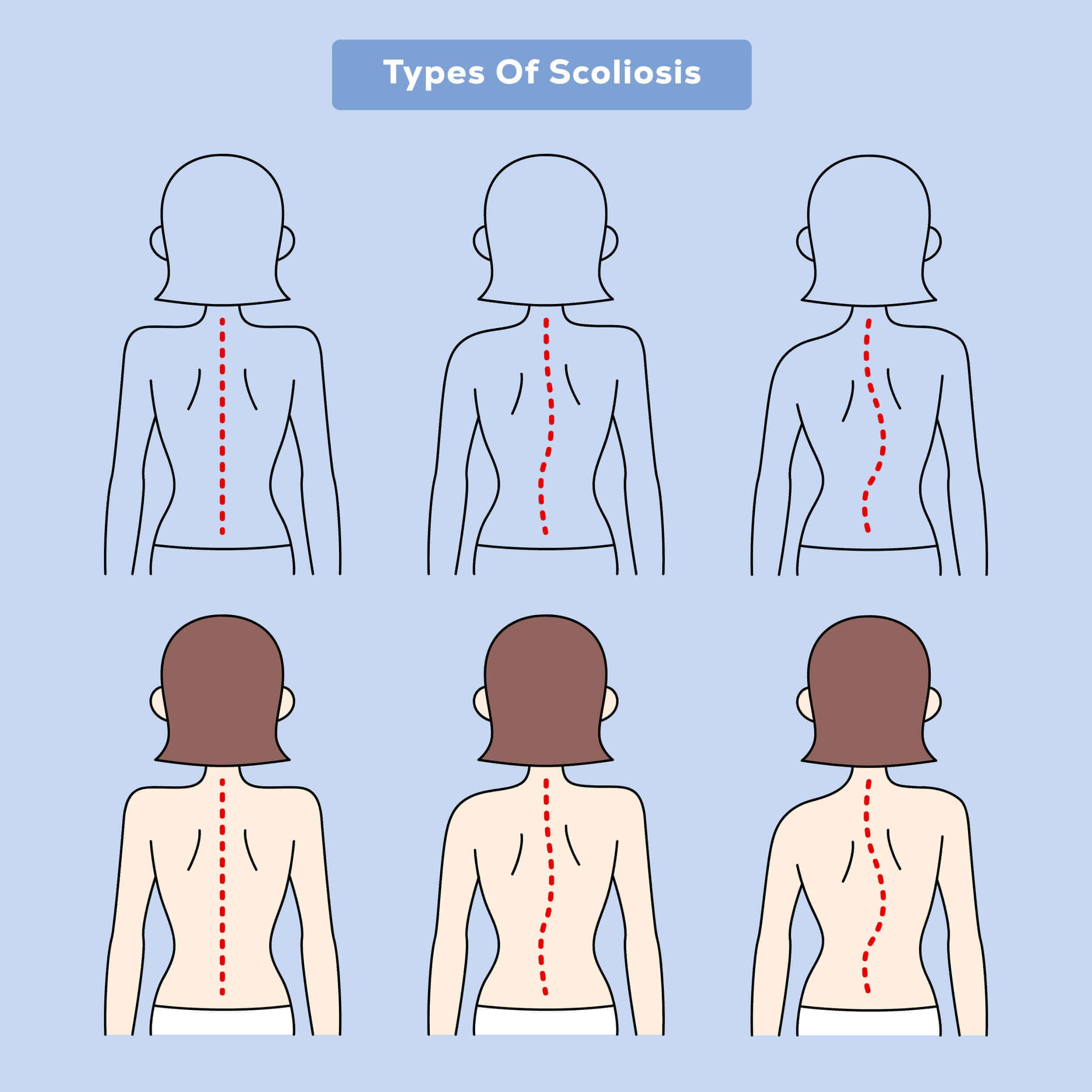
The main types of scoliosis are grouped by cause and severity:
- Idiopathic: It is the most common type with no known cause that appears during adolescence.
- Congenital scoliosis: A rare type that is commonly present at birth from a spinal malformation.
- Neuromuscular scoliosis: Type of scoliosis linked to conditions like cerebral palsy, spina bifida, or muscular dystrophy that affect muscle control around the spine.
- Mild: It is often unnoticed without screening due to spine curves less than 20 degrees.
- Moderate: Spine curves between 20 and 40 degrees, resulting in visible posture changes.
- Severe: This type requires bracing or surgery due to spine curves more than 40 degrees.
Visible Signs of Scoliosis
The earliest signs and symptoms of scoliosis are visual. These early signs show up before any pain or stiffness, which is why as parents you should look for them first. You can book a scoliosis screening for a clinical confirmation on NowServing.
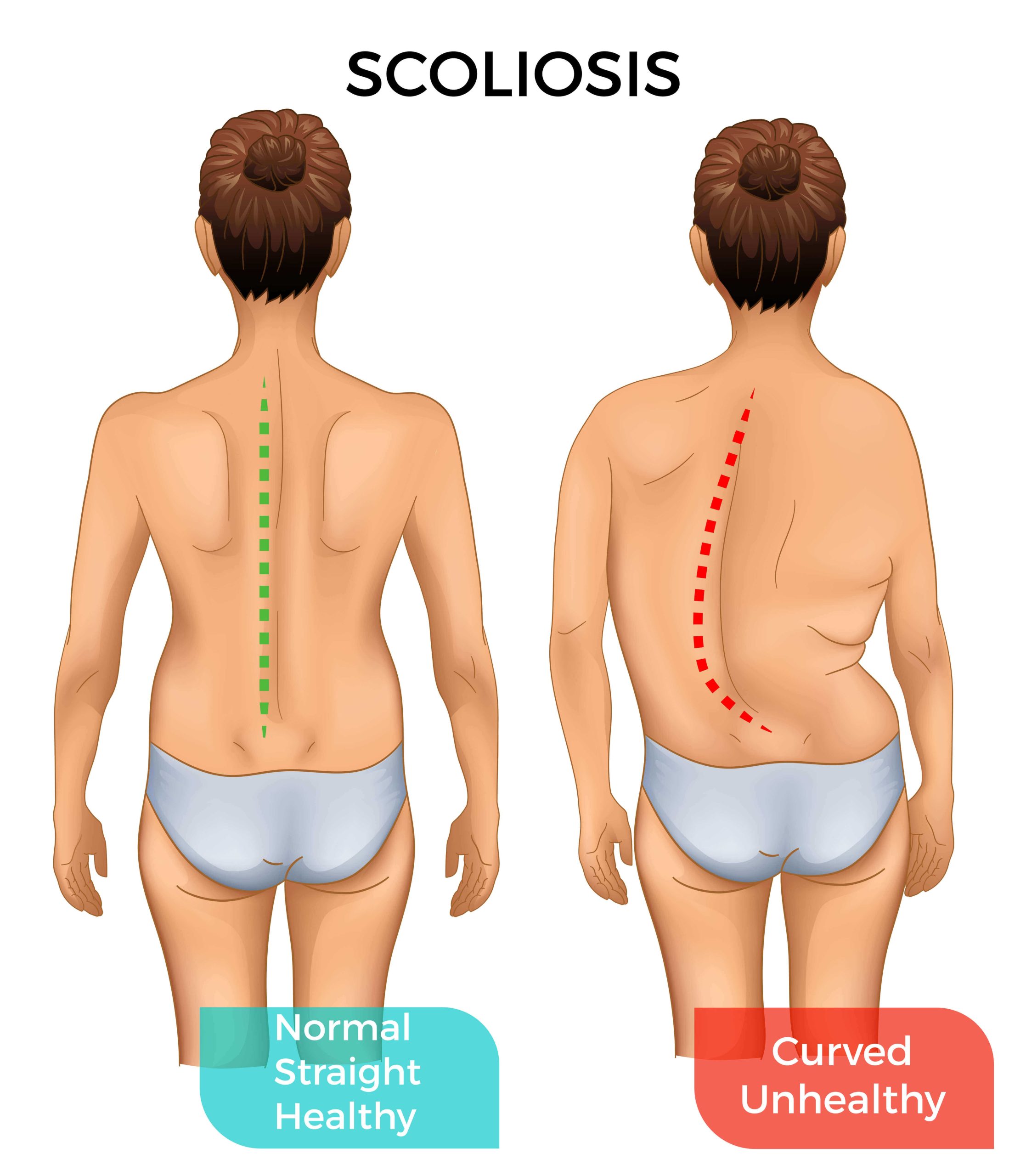
Uneven Shoulders or Shoulder Blades
The asymmetry is often subtle, easier to spot from behind than from the front. One shoulder may sit higher than the other or one shoulder blade may appear larger than its pair when the patient stands relaxed.
Uneven Hips and Asymmetrical Posture
A waistline can look asymmetrical, with more space between one arm and the body on one side. Hips may sit at different heights, with one side higher than the other. Some children’s bodies lean to one side, with the head not centered over the hips.
Rib Hump on the Forward Bend
It can be checked with the Adam’s forward bend test, The patient bends forward at the waist with arms hanging down. If the spine has a curve, one side of the rib cage rises higher than the other, creating a visible “hump.” This single check is one of the strongest visual indicators of scoliosis.
Other Physical Symptoms Scoliosis Patients Can Feel
Aside from visual symptoms, another indication of scoliosis involves physical symptoms that you may feel, If symptoms persist, you can find a doctor for the scoliosis pain on NowServing for evaluation.
- Back Pain: Most children with scoliosis do not feel back pain, but this pain is sharp, radiating, or paired with numbness in the legs may signal nerve involvement and needs immediate evaluation.
- Reduced Flexibility: A curved spine can limit how far the body bends or twists. Patients notice that one side feels stiffer than the other, or that they cannot reach as far overhead on one side.
- Muscle Fatigue: The muscles around the curve work harder to keep the body upright, so patients often report fatigue after long periods of standing or sitting without back support.
While adult patients commonly experience these symptoms, it is still important to monitor your child’s health. When physical limitations happen, it’s best to be proactive towards treatment, which physical therapy can help.
When Scoliosis Becomes Serious
Most cases stay mild and stable for life. A smaller share progresses to severe curves that affect more than posture. The signs and symptoms of scoliosis can shift from mild to serious quickly during growth spurts, so watch for these warning signs of progression:
- Curve progression: a spine curve that increases by more than 5 degrees in a year during growth spurts
- Breathing difficulty: a severe curve presses on the rib cage and reduces lung space, especially above 70 degrees
- Numbness: the curved spine pressing on nerves, a possible indicator of spinal cord injury
- Sleep-disrupting pain: chronic back pain that does not improve with rest or over-the-counter medication
- Worsening shift: a visible shift or hump that worsens over months, signaling the curve is no longer stable
Get a comprehensive spine assessment for progressive curves.

When to See a Doctor
The signs and symptoms of scoliosis listed below all warrant a doctor visit. Schedule one if you or your child shows any of these:
- A new visible asymmetry in shoulders, hips, or waistline
- A rib hump on one side during the forward bend test
- Persistent back pain in an adolescent that does not match a recent injury
- Numbness, tingling, or weakness in the arms or legs that may signal pressure on the nerves
- A previously diagnosed curve that looks worse over time
- Trouble breathing during normal activity
In the Philippines, school health programs often catch the condition during routine physical exams. If your child’s school flagged a possible curve, a follow-up visit with an orthopedic specialist confirms the diagnosis and sets the next step.
Para sa mga may sakit ng likod, alamin kung anong doktor ang dapat puntahan.
Scoliosis Treatment Options
Treatment depends on the type of scoliosis, the curve’s severity, the patient’s age, and whether the spine is still growing.
- Observation: mild scoliosis under 20 degrees usually needs only periodic checkups every 6 to 12 months
- Bracing: curves between 25 and 45 degrees in a growing child often respond to a back brace worn most of the day
- Physical therapy: targeted exercises strengthen back and core muscles, improving posture and reducing pain
- Surgery: severe curves above 45 to 50 degrees may need spinal fusion surgery
Scoliosis treatment depends on the severity of the patient’s condition. Visit your doctor to undergo physical examination of your case of scoliosis today.
How to Book a Consultation on NowServing
If you noticed any of the signs and symptoms of scoliosis or your child’s school flagged a possible curve, here is how to get checked through NowServing:
- Open the NowServing app or visit nowserving.ph and search for “scoliosis,” “pediatric-orthopedic,” or “spine.”
- Browse available pediatric orthopedic spine specialists and surgeons. You can filter by city, hospital, or availability.
- Choose between an in-person appointment or, where the doctor offers it, an online video consultation for the initial discussion.
- Prepare for your visit. Bring any previous spine X-rays, school screening notes, and a list of symptoms with when they started.
Many spine specialists prefer an in-person evaluation for scoliosis because the physical exam and X-ray reading are central to the diagnosis.
Frequently Asked Questions (FAQs)
What are the signs and symptoms of scoliosis?
The most reliable signs and symptoms of scoliosis are visual: uneven shoulders, an asymmetrical waistline, a rib hump on the forward bend, and a body that leans to one side. The Adam’s forward bend test is the most reliable single check used in school screenings. Adults may also feel persistent back pain. Most children with mild curves feel no pain at all.
Can you have scoliosis and not know it?
Yes. Mild cases often cause no pain and only subtle posture changes. Many are first caught during routine physical exams or screening, not because the patient noticed anything wrong on their own.
What are the early symptoms in adults?
In adults, the earliest symptoms are usually back pain, especially in the lower back, and a feeling that one side of the body is stiffer or weaker than the other. Visible posture changes, such as a leaning torso or uneven hips, may also appear over time.
When does scoliosis become a medical emergency?
It is rarely an emergency. Signs that need urgent care include sudden numbness or weakness in the legs, loss of bladder or bowel control, or breathing difficulty. These point to nerve compression or severe rib cage involvement that needs hospital evaluation.
Can scoliosis be prevented?
No, scoliosis cannot be prevented because most cases are idiopathic with no known cause. Early detection through school screening and regular checkups is the most effective way to catch curves before they progress.
What kind of doctor treats scoliosis?
Orthopedic surgeons who specialize in spine conditions are the primary doctors who diagnose and treat the condition. Physiatrists, who focus on physical medicine and rehabilitation, also play a key role for non-surgical management.
How much does scoliosis treatment cost in the Philippines?
Scoliosis treatment costs vary by severity: a screening consultation runs PHP 500 to PHP 1,500, a spine X-ray costs PHP 800 to PHP 2,500, a custom back brace ranges from PHP 15,000 to PHP 60,000, and physical therapy sessions are PHP 500 to PHP 1,500 each. Spinal fusion surgery in private hospitals typically costs PHP 500,000 to PHP 1,500,000, though public hospitals like the Philippine Orthopedic Center offer subsidized rates for qualified patients.
Is scoliosis covered by PhilHealth?
PhilHealth covers a portion of scoliosis surgery under its case rate benefits for spinal fusion, with the exact amount depending on the procedure and hospital tier. Outpatient consultations for orthopedic follow-ups also fall under standard PhilHealth benefits, but the full surgery cost is rarely covered, so patients usually shoulder the balance through savings or an HMO. Confirm current benefit amounts through PhilHealth’s Case Rate Search tool or the treating hospital before scheduling any procedure.
Can you work with scoliosis in the Philippines?
Most Filipinos with mild to moderate scoliosis are fit to work, and the condition alone rarely disqualifies applicants from office jobs, teaching, or most professional roles. Physically demanding careers like military, PNP, seafaring, and heavy manual labor may require a medical clearance because severe curves affect stamina, posture endurance, and lifting capacity. If a pre-employment medical exam flags a curve, ask an orthopedic spine specialist for a detailed fit-to-work certification for the specific job.
Conclusion
The signs and symptoms of scoliosis are more common than most people realize, and most cases stay mild for life. The signs to watch for are mostly visible: uneven shoulders, a rib hump on the forward bend, an asymmetrical waistline. The symptoms patients feel are often quiet until adulthood, when back pain becomes the most common signal that a curve is worsening.
If you noticed any of these signs in yourself or your child, find a specialist immediately. Book a pediatric orthopedic surgeon or spine specialist on NowServing. Early diagnosis gives you the most options if treatment is needed.