
An annual physical exam, or APE, is a yearly set of screening tests that looks for health problems before you feel them. Published package prices for August 2026 start at PHP 530 at TopHealth, PHP 850 at Kaiser Medical Center, and PHP 4,200 at Makati Medical Center. The top of the published range reaches PHP 81,800, but that is a hospital inpatient package with endoscopy in it, not a normal check-up. In the Philippines, the standard tests include the Basic 5: a physical exam by a doctor, a complete blood count (CBC), a routine urinalysis, a fecalysis, and a chest x-ray. So, where you go matters more than what you get.
What is an Annual Physical Exam?
Annual Physical Exam or APE is a screening test, not a treatment. Nobody is looking for anything in particular. Such tests are cheap, broad, and chosen because they catch common things early like anemia or parasites in the body.
It can screen conditions like the following:
- kidney problem
- urinary problem
- lung problem
That is also why it repeats every year. One CBC is a snapshot. Five years of CBCs is a trend, and the trend is usually what a doctor is reading.

What “Medical” Means When HR Says It?
Most Filipinos don’t say “annual physical examination” out loud. They say “medical,” as in “may medical kami sa office next week.”
If your HR just says “medical,” ask two things: which tests are covered, and whether you’re paying for anything. Those two answers decide whether you need to get an APE, Pre-employment Medical Clearance, or Executive check-up.
APE vs. Pre-employment Medical Exam
Both screening tests include the Basic 5, their difference is the purpose. A pre-employment medical decides whether you are fit for a particular job, and it ends in a fit-to-work classification. An annual physical exam is for someone already employed, and it ends in a set of results you keep. We covered the hiring version separately in the pre-employment medical exam guide.
APE vs. Executive Check-up
On the other hand, when it comes to these 2, their difference is the cost and types of tests involved. An executive check-up, sometimes called an ECU, is the same idea with far more tests bolted on like extended blood chemistry, a treadmill stress test, ultrasound, thyroid panels, tumor markers, and specialist consults. Some hospital versions include a room for a day or two.
The gap in price is large. Cebu Doctors’ University Hospital sells a basic check-up at PHP 7,490 and a comprehensive one at PHP 30,210 for men.
Learn more about the ECU packages available on NowExpress
The Basic 5, and Why Nearly Every Clinic Sells The Same Thing
The Basic 5 is the de facto floor for adult screening in the Philippines. It’s not a legal standard. It’s just what almost everyone converged on.
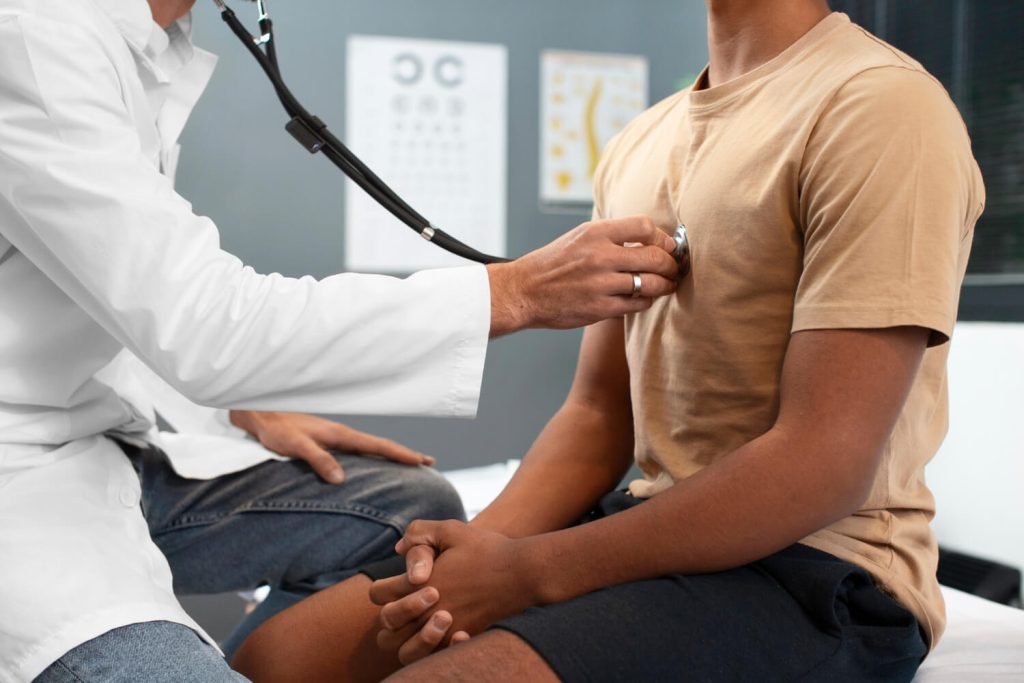
5 Tests Everyone Agrees On
Four providers define it near-identically on their own pages: Makati Medical Center, TopHealth, Maxicare, and FriendlyCare Clinic. UniHealth Southwoods uses the same phrase for both its pre-employment and annual packages.
The five tests for APE are:
- physical exam by a doctor
- complete blood count
- routine urinalysis
- fecalysis
- chest x-ray.
The fifth slot is the only real variation with hospitals and clinics use fecalysis. Meanwhile, the Maxicare HMO allows random blood sugar or cholesterol to stand in for it instead. That’s worth knowing if you’re comparing a clinic package against an HMO card.
Book a specialist for an APE under the Maxicare HMO doctor directory on NowServing
What Each of The Five Tests is Looking For
Complete Blood Count (CBC)
A CBC counts red cells, white cells and platelets from a small blood draw. It’s the test that usually picks up anemia, which is common here and often shows up as feeling hilo or tired for months without an obvious reason.
Routine Urinalysis
You give a urine sample in a cup. The lab reads it for infection markers, blood, protein and sugar. It’s the cheapest early look at your kidneys and urinary tract.
Schedule a urinalysis test on NowServing
Fecalysis
A stool sample, checked for parasites and blood. This is the test people skip and the one clinics chase them for, because most Basic 5 packages won’t release results without it.
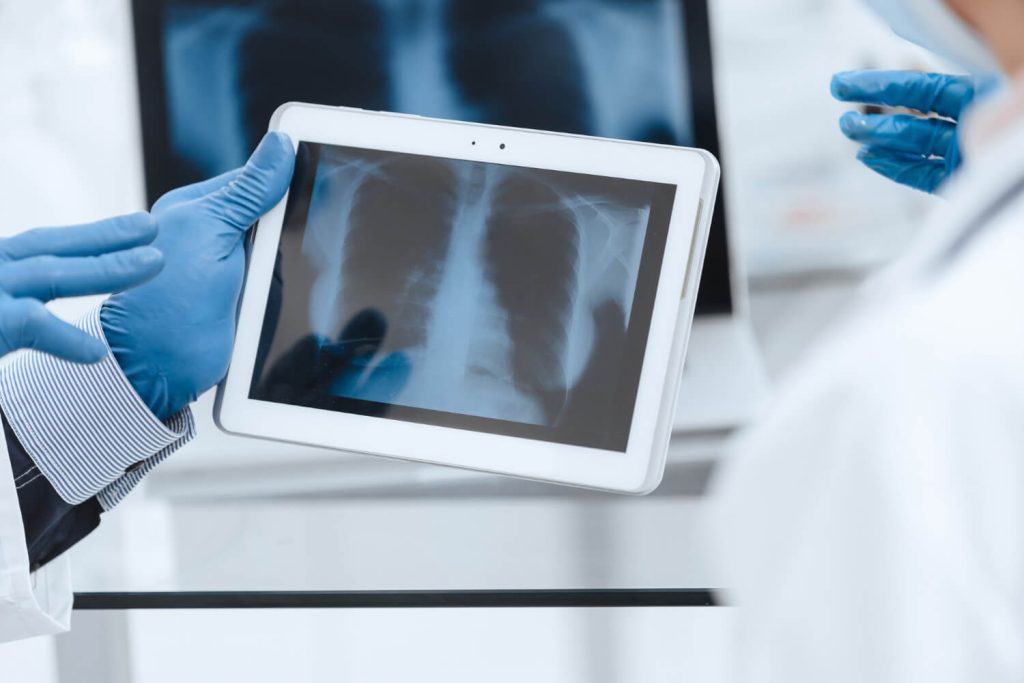
Chest X-ray
A front-view image of your lungs and heart shadow. In the Philippines this test carries extra weight because of tuberculosis screening, which is also why an abnormal reading makes people panic more than it should.
NOTE: X-ray test in APE is one of the screening tests that allow doctors to detect conditions like TB, pneumonia, or bronchitis
Physical Exam
A doctor takes your history, your blood pressure, height and weight, listens to your chest, and checks the obvious. It’s the part where you should mention anything you’ve been ignoring, whether you have a ‘sakit ng ulo’ that keeps coming back or ‘masakit ang tiyan’ after meals.
Determine whether your blood pressure is normal or lower with this guide.
Other Tests Recommended by Doctors Aside from The Basic 5
Blood Chemistry
The most common test upgrade. This is where cholesterol and blood sugar enter the picture, which for most working adults is the reason to upgrade at all.
Makati Medical Center‘s “Chem M” panel runs 18 components, including fasting blood sugar, the full lipid profile, creatinine, uric acid, SGOT and SGPT. Their “Chem 23” adds six more.
ECG and Other Heart Tests
A 12-lead ECG is the usual next step, and it’s cheap. Above that sit the treadmill stress test and the 2D echo with Doppler, which are executive-tier items in almost every package.
Kaiser Medical Center sells its Basic 5 at PHP 850 and Basic 5 plus ECG at PHP 1,300.
Book a doctor consultation for ECG and get an official reading of results on NowServing.

Ultrasound
Whole abdomen ultrasound appears in nearly every comprehensive package. It’s how the liver, gallbladder, kidneys and pancreas get looked at.
Age and Sex Specific Additions
Executive packages branch here. Male versions add PSA, which is also sold as a standalone test and is the one most men ask about after 50. Meanwhile, female versions add Pap smear, breast ultrasound or mammogram, and sometimes a transvaginal ultrasound. Geriatric packages add bone densitometry, audiometry and cognitive assessment.
Here is how the three tiers compare:
| Component | Basic 5 | Basic 5 plus | Executive / comprehensive |
|---|---|---|---|
| Physical exam by a doctor | Yes | Yes | Yes |
| CBC, urinalysis, fecalysis | Yes | Yes | Yes |
| Chest x-ray | Yes | Yes | Yes |
| Blood chemistry panel | No | Usually | Yes, extended |
| 12-lead ECG | No | Usually | Yes |
| Whole abdomen ultrasound | No | Rarely | Yes |
| Treadmill or 2D echo | No | No | Usually |
| HbA1c, TSH, FT4 | No | Rarely | Usually |
| Tumour markers (PSA, CEA, AFP) | No | No | Usually |
| Pap smear, breast imaging | No | Rarely | Usually |
| Specialist consults | No | Sometimes | Yes |
| Room, meals, parking | No | No | Top tiers only |
How Much Does An Annual Physical Exam Cost in The Philippines?
Every price below comes from the provider’s own published page or brochure, checked on 10 August 2026.
Entry Tier: PHP 530 to PHP 1300
TopHealth publishes its Basic 5 APE as “start at only PHP 530,” which is a starts-at figure and not a fixed price. Kaiser Medical Center’s PHP 850 is fixed and covers a consultation plus the five core tests across six branches. It can move up to PHP 1300 due to added ECG test.
|
Provider |
Package |
Price (PHP) |
What’s in it |
Where |
|
TopHealth |
Basic 5 APE |
starts at 530 |
PE by a doctor, CBC, urinalysis, fecalysis, chest x-ray |
Manila, Makati, onsite |
|
Kaiser Medical Center |
Package A, Basic 5 |
850 |
Consultation plus the five core tests |
6 branches, Luzon and Visayas |
|
Kaiser Medical Center |
Package C, Basic 5 + ECG |
1,300 |
Adds a 12-lead ECG |
Same |
That PHP 850 is the cheapest fixed, itemized, publicly published APE price we could find anywhere.
Mid Tier: PHP 1,600 – PHP 9,999
This is where government specialty hospitals and private hospital packages sit, and where the spread gets wide for reasons that have little to do with the test list.
|
Provider |
Package |
Price (PHP) |
What’s in it |
Where |
|
Philippine Heart Center |
Mini-Adult Package |
1,600 |
FBS, lipid profile |
Quezon City |
|
Asian Hospital |
Senior Wellness Card |
1,800 |
Geriatric assessment, bio-electrical impedance |
Muntinlupa |
|
Asian Hospital |
Basic Wellness Card |
2,800 |
Basic 5, body fat analysis, one room upgrade |
Muntinlupa |
|
Philippine Heart Center |
Basic Adult Package |
3,150 |
CBC, FBS, lipid profile, urinalysis, chest x-ray |
Quezon City |
|
Makati Medical Center |
Health Investment Essentials |
4,200 |
The Basic 5, outpatient |
Makati |
|
Philippine Heart Center |
Hypertension Package |
4,500 |
Adds creatinine, uric acid, ECG |
Quezon City |
|
AIDE |
Basic Health Package |
5,000 to 5,700 |
14 blood and urine tests, home service |
NCR |
|
The Hospital at Maayo |
Basic Executive |
6,000 |
Chem panel, CBC, urinalysis, ECG, chest x-ray, consult, meal |
Mandaue, Cebu |
|
Asian Hospital |
Premium Wellness Card |
6,500 |
Basic 5, body fat analysis, concierge, discounts |
Muntinlupa |
|
Cebu Doctors’ University Hospital |
ECU A1 Basic |
7,490 |
19 lab tests, ECG, chest x-ray |
Cebu City |
|
Maxicare |
PRIMA Access |
9,999 per year |
APE Basic 5, unlimited consults, 24 Set A lab tests |
Maxicare Clinics |
Notice the PHP 850 and the PHP 4,200. Same five tests, roughly five times the price. You’re paying for the facility, not the information.
Buying the Tests One by One Usually Costs More
Kaiser publishes its individual rates, so you can check the arithmetic. Urinalysis PHP 130, fecalysis PHP 120, CBC with platelet PHP 320, chest x-ray PHP 350.
| Route | What you get | Price (PHP) |
|---|---|---|
| Four lab tests bought separately | Urinalysis, fecalysis, CBC with platelet, chest x-ray | 920 |
| Package A bundle | The same four plus the consultation | 850 |
The bundle wins, and it includes the doctor. That pattern held at every facility that published both.
We went deeper on the comparison across providers in the APE package price breakdown.
Executive Check-ups, and why the top of the range isn’t a normal price
|
Provider |
Package |
Price (PHP) |
Notable inclusions |
|
The Hospital at Maayo |
Comprehensive Executive |
18,800 |
Thyroid panel, HbA1c, fibroscan, 2D echo, whole abdomen UTZ |
|
Makati Medical Center |
Urban Professional’s Screening A |
19,400 |
Basic 5, Chem M, ECG, 4-organ UTZ, diet counselling |
|
Makati Medical Center |
HealthHub Executive Package |
20,900 |
Adds treadmill |
|
Manila Doctors Hospital |
Executive Health Checkup Silver |
21,850 |
Not itemised on the page |
|
Cebu Doctors’ University Hospital |
ECU C2 Comprehensive (female) |
25,530 |
Adds Pap smear and mammogram |
|
Makati Medical Center |
Empowered Women’s Screening |
28,500 |
Breast UTZ, gynae UTZ, T |
|
Manila Doctors Hospital |
Executive Health Checkup Diamond |
30,000 |
Not itemised on the page |
|
Cebu Doctors’ University Hospital |
ECU C1 Comprehensive (male) |
30,210 |
Flexible sigmoidoscopy, carotid duplex, 2D echo |
|
Makati Medical Center |
Urban Professional’s Screening B |
31,400 |
Adds thyroid and hepatitis panels |
|
SLU Sacred Heart Medical Center |
Executive Check-up, female |
38,000 regular |
2-day stay, Pap smear, pelvic UTZ, 5 specialist consults |
|
SLU Sacred Heart Medical Center |
Executive Check-up, male |
40,500 regular |
2-day stay, PSA, thyroid UTZ, CEA, AFP |
|
Makati Medical Center |
Healthy Heart Screening |
42,200 |
2D echo, carotid duplex, treadmill |
|
Makati Medical Center |
Geriatric Female |
45,230 |
Bone densitometry, 3D mammogram, audiometry |
|
Makati Medical Center |
HealthHub CVD Screening A, inpatient |
68,500 |
The most expensive pure check-up we found |
|
Makati Medical Center |
Comprehensive Abdominal A, inpatient |
81,800 |
Includes EGD and colonoscopy with sedation |
The like-for-like spread
Compare executive packages against each other and the honest range is roughly P6,000, at The Hospital at Maayo in Mandaue, to PHP 42,500, which is SLU Sacred Heart’s HMO rate for the male package in Baguio.
One oddity worth flagging: SLU Sacred Heart publishes an HMO rate that is higher than its cash rate on every package. Paying with your HMO card is not automatically the cheaper route.
The very top of the list
PHP 81,800 buys endoscopy and colonoscopy with sedation, specialist fees, and a hospital stay. That’s a screening package with real procedures inside it. Nobody should read it as what a check-up costs.
Why Two Price Lists from the Same Hospital Can Disagree
Makati Medical Center currently has two live price lists on its own domain. The web page says “Effective March 1, 2026.” A PDF still sitting in the site’s uploads folder says “Effective January 1, 2024,” and the numbers differ: Basic 5 at PHP 4,000 versus PHP 4,200, Executive at PHP 19,900 versus PHP 20,900.
NOTE: We used the 2026 figures throughout. If you find a cheaper number in a PDF, check the effectivity date before getting excited.
When Only An Aggregator has a Number
Several well-known providers publish no prices at all. St. Luke’s lists five package names and zero prices. The Medical City’s pages wouldn’t load. Hi-Precision publishes full test compositions for every package and no price anywhere.
Third-party sites do quote figures for these:
- Hi-Precision at PHP 1,100, PHP 2,150 and PHP 3,150
- St. Luke’s wellness range of PHP 25,000 to PHP 120,000.
Neither provider publishes those numbers themselves, so treat them as hearsay and call the hospital.
Can PhilHealth or Your HMO Cover the Cost?
PhilHealth Konsulta
Konsulta covers 15 laboratory and diagnostic items, including CBC, lipid profile, FBS, HbA1c, creatinine, chest x-ray, ECG, urinalysis, Pap smear and fecalysis. That list looks a lot like an APE, which is why people assume it’s free.
Annex B of Circular 2024-0013 words it carefully: those tests are covered “as needed as part of case management” by the primary care team you registered with. It’s a capitated primary care package, not a voucher for a yearly check-up. We found no PhilHealth page saying a standalone APE or executive check-up is reimbursable.
HMO Cards
Only one HMO we checked publishes an itemised APE with a price. Maxicare’s PRIMA Access prepaid card is P9,999 a year and includes an APE Basic 5, availed only at Maxicare Clinics, plus unlimited consults and 24 Set A lab tests.
We could not source published APE inclusions from Intellicare, PhilCare, Medicard or Cocolife. If you hold one of those, your coverage exists in your plan document, not on a public page.
Browse the NowServing HMO Directory and see which one you can use for an APE
Who Pays When Your Employer Requires APE
DOLE’s workplace safety rules say periodic medical exams are free of charge to workers. For how that applies to your company, ask your HR team or the DOLE regional office covering your workplace.

When Your Company Arranges APE for Everyone
If HR runs the exam for the whole office, the mechanics change. They pick a provider, lock a date, and either the clinic sends a mobile team onsite or everybody troops to a branch. TopHealth, for one, runs its own mobile clinic for exactly this.
That’s the world of company-arranged annual physical exams, and it’s why two people with the same job title can end up with very different test lists. We wrote up how companies actually schedule these in the employer’s guide to APEs.
How to Prepare for an APE?
Fasting
If your package includes fasting blood sugar or a lipid profile, you’ll be asked to fast overnight. Water is usually fine. None of the package pages we checked publishes the exact number of hours, so confirm with your clinic when you book.
Stool Sample
Collect it at home in the container the clinic gives you, or ask whether they’ll accept one collected on site. This is the single most common reason a package sits unreleased for a week.
What to Bring
A valid ID, your company’s letter of authorization if there is one, and any previous results you still have. Old results are more useful than people realize, because the comparison is the point.
If you are picking the facility yourself rather than being sent to one, our guide to finding a diagnostic center covers what to check before you book.
If You’re Pregnant, or Having Your Period
Tell the technologist before the chest x-ray if you’re pregnant or think you might be. And many labs prefer to reschedule a urinalysis if you’re having your period, since blood in the sample muddies the reading.
What the Day Looks Like, and Does it Hurt
The honest answer to “masakit ba?” is: briefly, and only the blood draw. One needle, a few seconds, a cotton ball taped to your arm. The chest x-ray, urinalysis and fecalysis involve no pain at all.
The part people underestimate is waiting. Expect a longer queue at a hospital than at a small clinic, and expect the fasting packages to be scheduled early in the morning for that reason.
Come rested if you can. Puyat can nudge your blood pressure reading, and a high reading you caused yourself just means a repeat.
How to Read Your Results
The Reference Range is Doing The Work
Every lab prints a reference range beside each result and flags anything outside it. You don’t need to memorize normal values. You need to look at which lines got flagged.
A flag is a finding, not a diagnosis. Plenty of flagged results are meaningless on their own and only matter as a pattern. Make sure to consult with your doctor for an official reading of your test results.
Findings that Commonly Turn Up
- Low hemoglobin on a CBC
- Infection markers on urinalysis
- Parasites on fecalysis
- Elevated fasting blood sugar or cholesterol on a chemistry panel
- Something noted on the chest x-ray.
Any of those is worth bringing to a doctor rather than searching online at 1am. Internal Medicine is usually the right first stop, and they’ll refer onward if the finding needs a specialist.
The Fit-to-Work Classes
If the exam produces a classification, it comes from OSHS Rule 1967.01(3), which rates people Class A through D.
- Class A is fit for any work
- Class B covers correctible defects like refraction errors or dental caries
- Class C is employable with limited duty and follow-up, and it expressly includes conditions like hypertension and heart disease
- Class D is unfit for any employment
The reassuring reading of that scale: only active PTB sits in Class D, so an abnormal chest x-ray is a finding to follow up, not a verdict on your job.
What an Annual Physical Exam Won’t Catch
The Basic 5 doesn’t screen for cancer. It doesn’t include a diabetes test unless blood chemistry is added. It doesn’t look at your heart beyond a stethoscope unless there’s an ECG, and it doesn’t image your abdomen at all.
So a clean APE means the tests that were run came back unremarkable. It doesn’t mean nothing is wrong, and it shouldn’t stop you from seeing a doctor about a symptom that’s been bothering you. If something has been bothering you for weeks, book a consult about that specific thing rather than waiting for next year’s package to find it.
Frequently Asked Questions
Do I need to fast before an annual physical exam?
If your package includes fasting blood sugar or a lipid profile, yes, most labs ask for an overnight fast, and water is usually fine. A plain Basic 5 has no blood chemistry in it, so fasting is often not required. None of the package pages we checked publishes the exact number of hours, so confirm with your clinic when you book.
Does PhilHealth cover an annual physical exam?
Not as a standalone benefit. PhilHealth Konsulta covers 15 laboratory and diagnostic tests, but Annex B of Circular 2024-0013 says they are covered as needed as part of case management by the primary care team you registered with, which is a clinical decision rather than a yearly entitlement. We found no PhilHealth page stating that a standalone annual physical exam or executive check-up is reimbursable.
Is an annual physical exam the same as a pre-employment medical exam?
The test list is often identical, since both usually run on the Basic 5. The purpose is different. A pre-employment medical decides whether you are fit for a specific job and ends in a fit-to-work classification. An annual physical exam is screening for someone already employed, and it repeats every year so changes over time become visible.
Does my employer have to pay for my annual physical exam?
Under the DOLE Occupational Safety and Health Standards, Rule 1967, workers must undergo physical examination periodically at intervals of no longer than one year, and those examinations are to be rendered free of charge to the workers. There are carve-outs: land, sea and air transportation establishments and mining activities sit outside those rules, and the pre-employment paragraph of the same rule contemplates an applicant paying for the chest x-ray in some cases.
Can I get an annual physical exam on my own, without a company?
Yes. Kaiser Medical Center sells its Basic 5 at PHP 850 across six branches, Asian Hospital sells wellness cards from PHP 1,800, and AIDE runs a home-service package in NCR at PHP 5,000 to PHP 5,700 for 14 tests. You do not need an employer or an HMO referral to buy any of them.
What happens if something abnormal shows up?
The lab prints a reference range beside every result and flags anything outside it, and a flag is a finding rather than a diagnosis. Bring the flagged results to a doctor, usually Internal Medicine first, and let them decide whether it needs repeating, monitoring or a referral. An abnormal chest x-ray in particular is worth following up, and under the OSHS fitness classification only active PTB falls in the unfit-for-any-employment class.