One of the most common cancers in women is breast cancer. That’s why it is important to be aware of the possibility of having this condition through checking if there’s a lump in your breast. Although, you must know that not all lumps under the breast are cancerous. About 80% of breast lumps turn out to be benign, or noncancerous.
That said, every lump in breast deserves attention. Find out how you can check yourself at home, and know when it’s time to see a doctor for breast cancer. Let’s begin!
What Does a Lump in Breast Actually Mean?
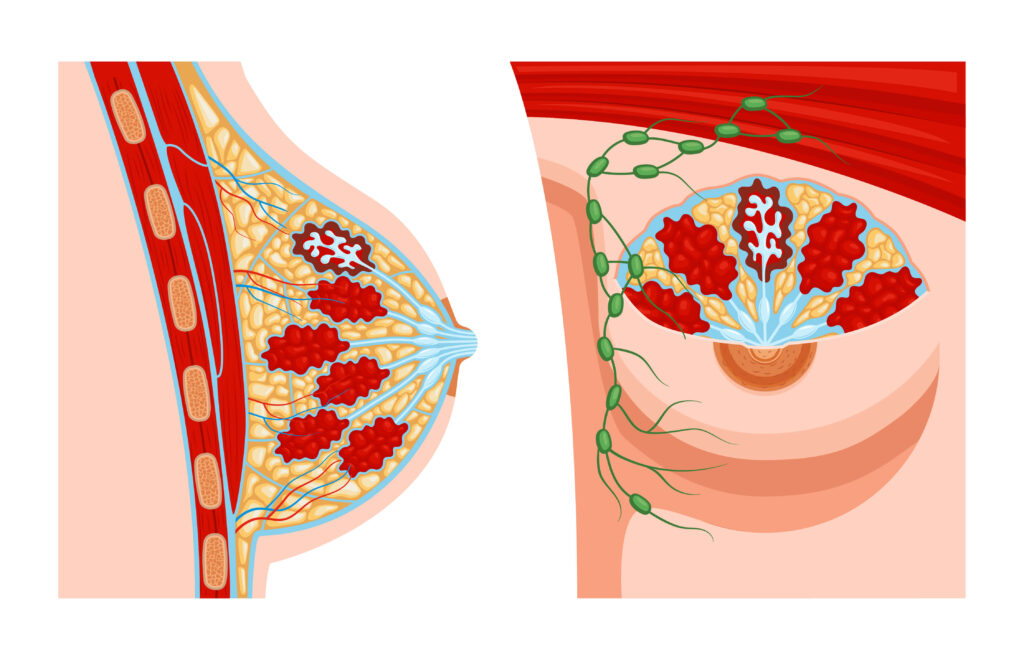
A lump in your breast is any area of breast tissue that feels different from the surrounding tissue. Some lumps feel hard and fixed in place. Others are soft, round, and movable.
The feel of your breasts naturally changes throughout your menstrual cycle because of shifting hormone levels. This is why doctors recommend doing self-exams at the same time each month, usually a few days after your period ends.
You can prepare before your menstruation to examine yourself in the mirror. Here’s a simple guide to help you know that your red days are coming.
When a Breast Lump Could Be a Sign of Breast Cancer
Cancerous breast lumps have certain characteristics, though they’re not always obvious. A lump that feels hard, has irregular edges, and doesn’t move when you push it is more concerning than one that’s smooth and movable. If it’s a dense breast tissue, you’ll likely need to visit a doctor to examine the lumps.
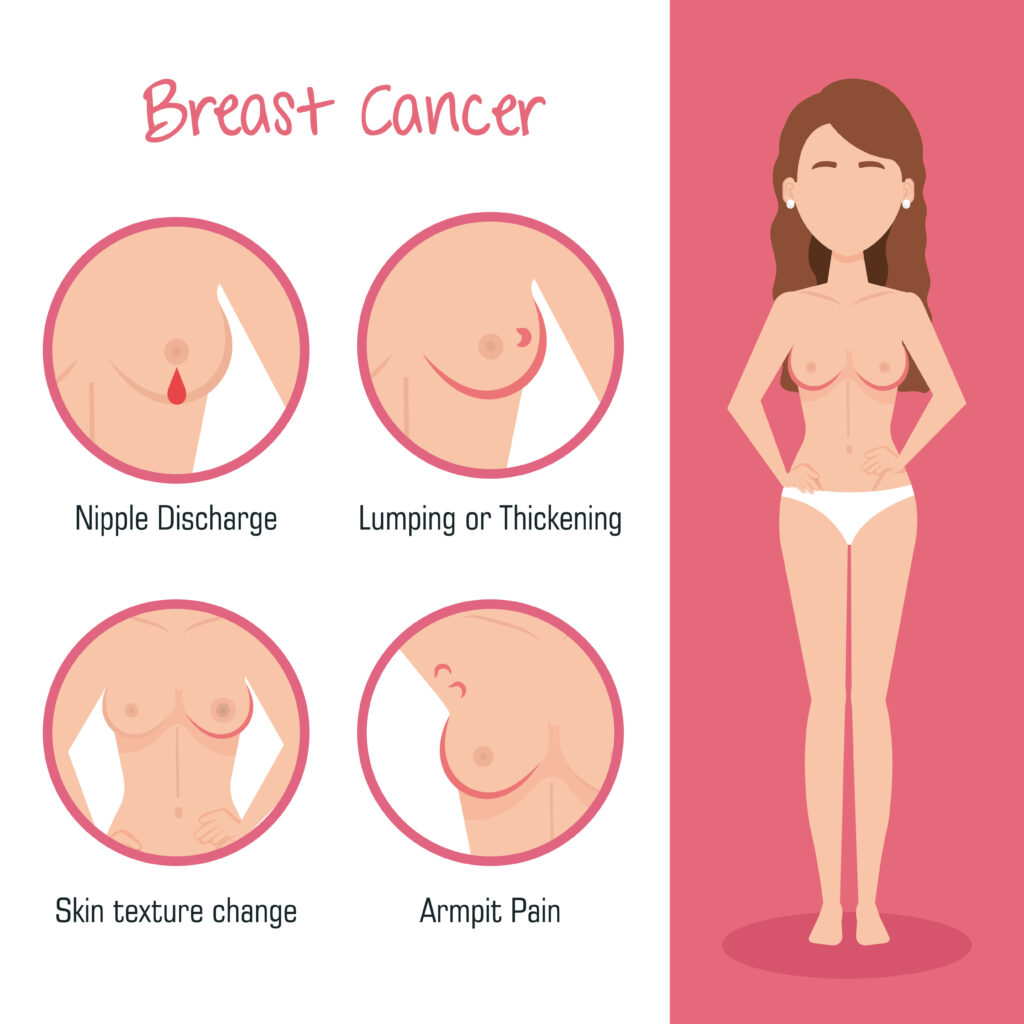
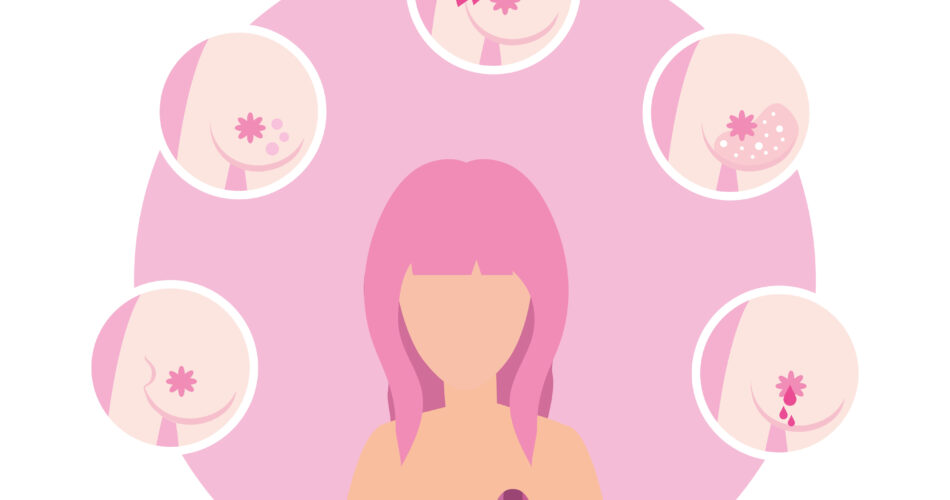
Other warning signs of breast cancer to watch for:
- nipple discharge (especially bloody discharge)
- changes in breast size or shape
- skin dimpling or puckering
- redness or thickening of the breast skin
Take note that a family history of breast cancer, or a history of hormone replacement therapy can increase your breast cancer risk. If you suspect that the lump in your breast might be cancerous, consult a doctor for breast cancer on NowServing.
You can also consult a doctor if you have other breast problems aside from a lump in your breast.
How to Check for Lump in Breast at Home
Breast self-exams help you learn the normal feel of your breasts so you can spot breast changes early. The exam takes about five minutes and should be done once a month.
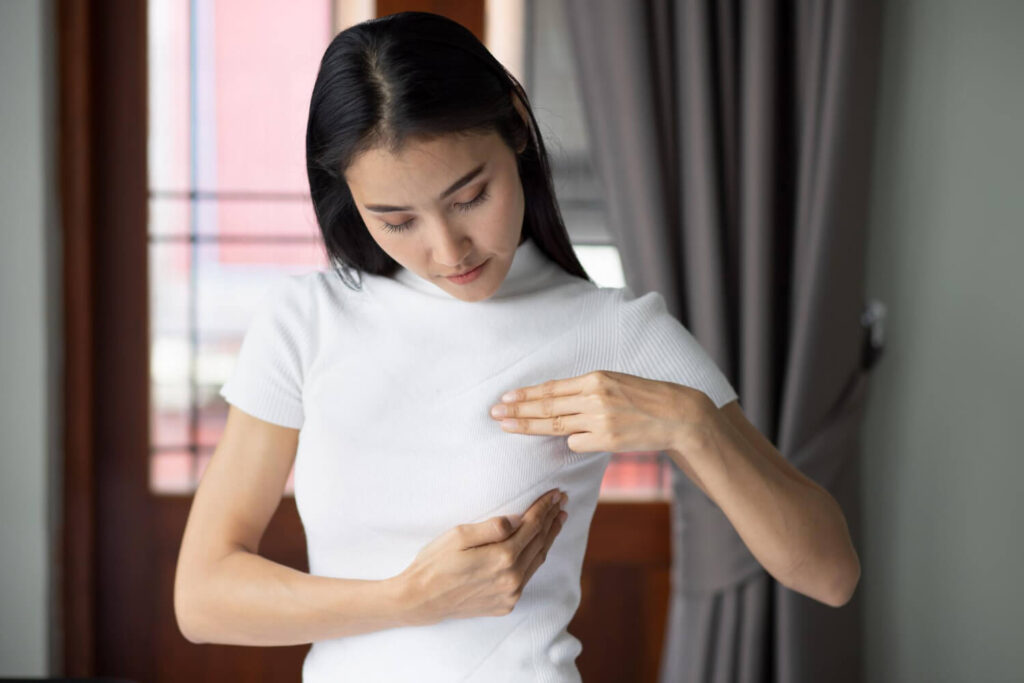
- Stand in front of a mirror and check for lumps: Start by standing with your arms at your sides. Look for any visible changes in breast size, shape, or skin texture. Then raise your arms overhead and check again. Look for dimpling, puckering, or any area where the skin pulls inward.
- Use your hands to feel for lumps: Lie down and place your right arm behind your head. Use the pads of your three middle fingers on your left hand to check your right breast. Press in small circular motions, covering the entire breast from your collarbone to below your breast, and from your armpit to your chest wall.
- Use three levels of pressure: Light pressure for tissue just beneath the skin, medium pressure for tissue in the middle, and firm pressure for tissue close to the chest wall and ribs. Check your lymph nodes in the armpit area as well. Repeat on the other side.
What You Should Feel During Self-examination?
Pay attention to any lump that feels different from the rest of your breast tissue. This includes hard lumps, lumps with irregular shapes, areas of thickening, and anything that feels like it’s attached to the skin or chest wall.
Note: Some women find it easier to do this exam in the shower, since soapy fingers glide more smoothly over the skin.
How to Know It’s Time for a Doctor Visit for Breast Cancer Lump?
Lumps in breast can be alarming, especially if your monthly self-examination shows changes. These signs mean you should schedule a doctor visit to get diagnosed properly.
Here are the common reasons why you should take your breast cancer lump seriously:
- New lump that doesn’t go away after your next menstrual cycle
- Existing lump under breast changes in size or texture
- There’s a blood nipple discharge
- Breast skin develops dimpling (like an orange peel texture), redness, and a hard, painless lump that doesn’t move
Women with a family history of breast cancer or other risk factors should talk to their doctor about starting mammograms earlier than the standard recommendation of age 40.
Visit an oncologist for breast cancer to request a mammogram service. If you need to undergo laboratory tests like mammograms, you can visit the Connected Care partner clinics of NowServing. Get your tests done, and earn points that you can exchange for gift cards on the NowServing app.
Read this related article to know more about the Connected Care program of NowServing.
What Happens During a Breast Lump Evaluation
At this time, the doctor will request some tests to clinically examine your breast for breast lumps. Your doctor will request imaging tests and biopsies if needed.
Imaging Tests
Depending on the exam findings, your doctor may order a breast ultrasound, a mammogram, or both. Breast ultrasound is especially useful for women with dense breast tissue. These imaging tests help determine whether the lump is solid or fluid-filled and whether it looks suspicious.
Breast Biopsy
If imaging results show a suspicious area, your doctor will recommend a breast biopsy. This involves removing a small sample of breast tissue for lab testing. A biopsy is the only way to confirm whether a breast lump is cancerous.
On the other hand, to treat the cancerous lump, the doctor will perform a breast mass excision.
Get diagnosed to have a breast mass excision today. Book your doctor consultation on NowServing.
How to Book a Breast Cancer Screening on NowServing
Booking a doctor consultation to receive proper diagnosis for your breast cancer lump is a straightforward process on NowServing. Here’s how!
- Open the Breast Cancer page on NowServing or use the NowServing for easier access
- Browse the doctor directory and select your preferred doctor.
- Select a doctor and choose between an online video consultation or in-person appointment.
- Confirm your booking and get a consultation within 15 minutes for online visits.
While online consultation is an available option on NowServing, it is only ideal for non-emergency conditions. Meanwhile, lump in breast is a serious condition that warrants physical examination. That’s why it’s best to visit a hospital or your doctor’s clinic.
If you need emergency consultation with doctors, you can use the On-demand booking feature to speak with primary care doctors on NowServing.
Frequently Asked Questions (FAQs)
Is a lump in the breast always cancer?
No. About 80% of breast lumps are benign. Common benign breast conditions include fibrocystic changes, fibroadenomas, breast cysts, and fat necrosis. However, any new or unusual lump should be evaluated by a doctor to rule out breast cancer.
What does a cancerous breast lump feel like?
Cancerous breast lumps tend to feel hard and have irregular edges. They usually don’t move when pressed and may be painless. Some are accompanied by breast skin changes, nipple discharge, or changes in breast size.
Can lump under breast go away on its own?
Some breast lumps, especially those caused by hormonal changes during your menstrual cycle, can go away on their own. Breast cysts may also shrink without treatment. If a lump persists for more than one menstrual cycle, see a doctor for evaluation.
When should I worry about a lump under my breast?
A lump under your breast, near the chest wall or along the bra line, should be checked if it’s hard, growing, painless, or doesn’t move. Lumps in this area could be related to breast tissue, lymph nodes, or the chest wall itself.
Does radiation therapy increase the risk of breast cancer?
Having radiation therapy to the chest area before age 30 can increase your risk of breast cancer later in life. If you’ve had radiation therapy, talk to your doctor about earlier and more frequent breast cancer screening.
Conclusion
Finding a lump in your breast is understandably stressful, but most breast lumps are benign. The key is knowing your body, doing regular self-exams, and seeing a doctor when something feels different.
Catching changes early makes a real difference in treatment options. If you’ve found a breast lump or have concerns about breast changes, book a consultation with an oncologist for breast cancer. You can also find other specialists that can manage lump in breast on NowServing.