A single therapy session in the US costs more than a week of groceries back home.
If you’re a Filipino living overseas, you already know this math. You’ve looked up therapists in your area, seen the rates ($150-300 per session in the US, $100+ out of pocket in Australia, £50-90 in the UK), and quietly closed the tab.
Maybe you told yourself you’d deal with it later. Or that you’re not “bad enough” to need help. But the reality is simpler than that: the price made the decision for you.
Here’s what most Filipinos abroad don’t realize yet. You can book a licensed Filipino psychiatrist online, have a proper consultation via video call, and pay a fraction of what you’d spend locally. These are PRC-licensed physicians with specialty training in psychiatry, practicing legally from the Philippines through telehealth.
This guide covers exactly how that works, what it costs, when you need a psychiatrist versus a psychologist, and how to navigate prescriptions across countries.

The cost problem for Filipinos overseas
Mental health care is expensive almost everywhere Filipinos live abroad. The numbers are hard to ignore.
In the United States, a psychiatrist consultation runs $150-300 per session. That’s with insurance, if your plan even covers mental health. Without insurance, initial psychiatric evaluations can hit $500 or more. In Australia, Medicare covers part of a psychiatrist visit, but the out-of-pocket gap is still $100+ per session. In the UK, private psychiatry starts at £150-300 for an initial appointment and £50-90 for follow-ups. In Singapore and the Middle East, rates are comparable to the US.
Now compare that to the Philippines. Psychiatrist consultations in the Philippines generally range from P1,500 to P5,000, depending on the doctor’s experience and whether it’s an initial or follow-up session. That’s roughly $27-90 USD.
The cost difference isn’t marginal. It’s the difference between getting help once and stopping, versus actually sticking with treatment. Consistency matters in mental health care. A one-off session where someone tells you to “try meditation” doesn’t do much. Regular follow-ups, medication adjustments, and ongoing check-ins are what actually move the needle. And that only happens when you can afford to keep going.
For OFWs sending money home every month, the math is even tighter. Every dollar spent on yourself feels like a dollar taken from your family. Filipino psychiatrists offer a way to get real, qualified help without the financial guilt that comes with international rates.
Read this related blog about booking psychologists online on NowServing.
Psychiatrist vs. psychologist vs. counselor: which do you actually need?
These three titles get mixed up constantly, and the differences matter when you’re deciding who to book. Here’s a clear breakdown.
Psychiatrists are medical doctors. They went through medical school, then did additional specialty training in psychiatry. They can diagnose mental health conditions (anxiety disorders, depression, bipolar disorder, ADHD, and others), prescribe medication, and provide therapy. In the Philippines, they hold an MD degree and are board-certified in psychiatry.
You need a psychiatrist if you think medication might be part of your treatment. If you’re experiencing symptoms that feel beyond what “talking it out” can fix, like persistent insomnia, panic attacks, severe mood swings, or concentration problems that affect your daily life, a psychiatrist is your starting point.
Psychologists (clinical) hold advanced degrees in psychology and are trained in assessment, diagnosis, and psychotherapy. In the Philippines, they are licensed by the Professional Regulation Commission (PRC) as Registered Psychologists (RPsy). They provide structured therapy like CBT (Cognitive Behavioral Therapy), psychoanalysis, and other evidence-based approaches. They cannot prescribe medication.
If you want regular talk therapy, a psychologist is often the right fit. They’re trained to help you understand patterns in your thinking and behavior, and to give you tools to manage anxiety, depression, grief, and relationship issues. If finding one who speaks your language is a priority, we’ve written a separate guide on finding a Tagalog-speaking psychologist.
Counselors are licensed as Registered Guidance Counselors (RGC) by the PRC. They focus on life adjustments, career issues, relationship problems, and general emotional support. They’re a good starting point for situational stress, homesickness, adjustment to life abroad, or family conflicts that don’t involve a diagnosed mental health condition.
Still not sure? A general rule: if you think medication might be needed, see a psychiatrist. If you want structured therapy (CBT, for example), see a clinical psychologist. If you need someone to help you work through a difficult life situation, a counselor or psychotherapist is a great option.
How online psychiatrist consultations actually work
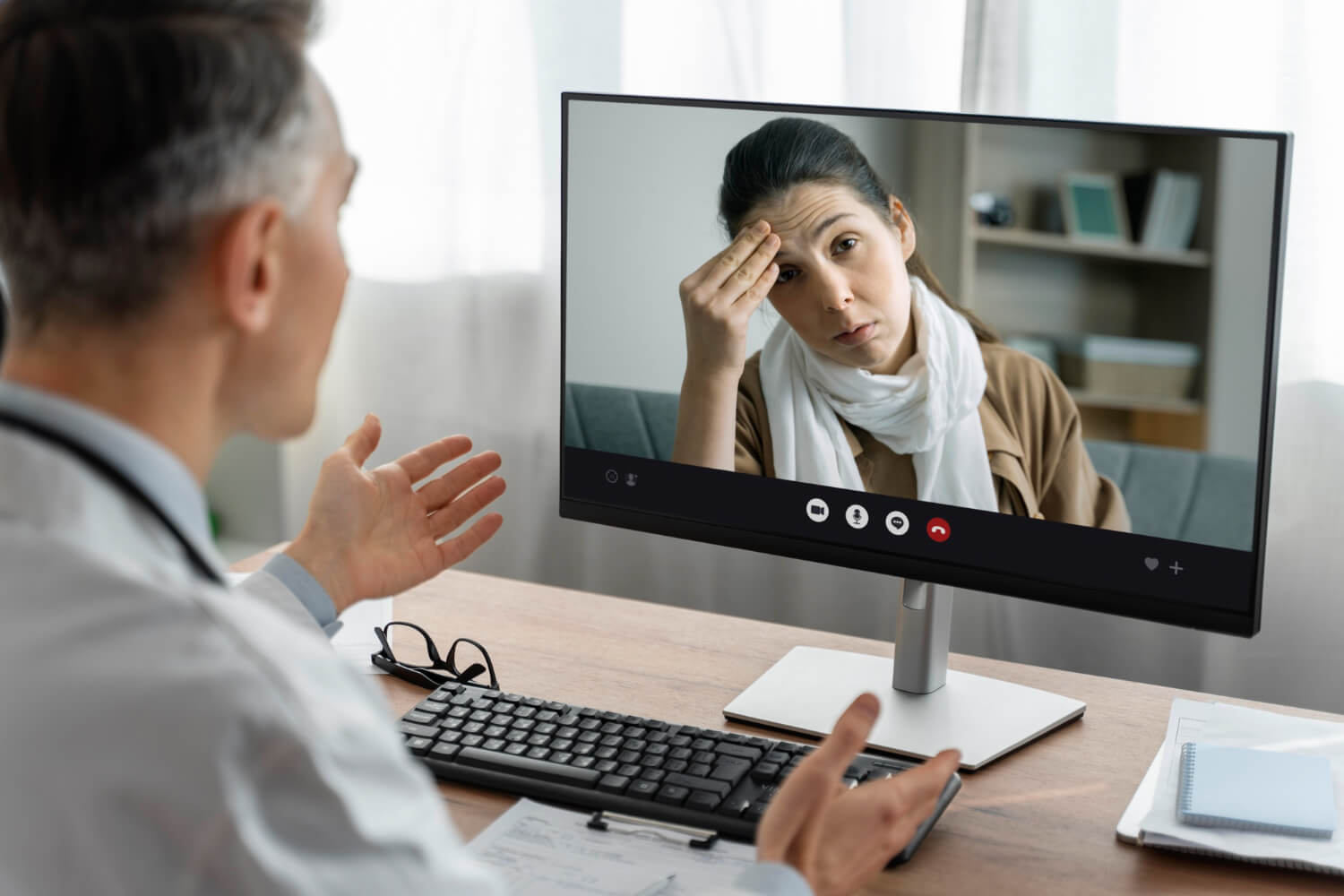
If you’ve never done an online psychiatric consultation, the process is simpler than you might expect. There’s no special equipment, no app to install. It’s a video call. (If you want a broader overview of how online mental health consultations work in the Philippines, we cover that separately.)
Here’s what a typical first consultation looks like:
Before the session. You book a time slot that works with your timezone. You’ll fill out basic information about yourself, your medical history, and what you’re seeking help for. Some psychiatrists send a short questionnaire ahead of time. This helps them prepare so you’re not spending the first 20 minutes giving background.
The initial assessment (30-60 minutes). Your first session is longer than follow-ups. The psychiatrist will ask about your symptoms, how long you’ve been experiencing them, your family history, sleep patterns, stress levels, and daily functioning. This isn’t casual conversation. It’s a structured clinical assessment. They’re trying to understand whether your symptoms point to a specific condition (anxiety disorder, major depression, bipolar disorder, ADHD, etc.) or whether what you’re going through is situational and might respond better to therapy alone.
Diagnosis and discussion. If there’s a clear clinical picture, the psychiatrist will explain their assessment. They’ll discuss what they think is going on, what the options are (medication, therapy, lifestyle changes, or a combination), and what they recommend. Good psychiatrists take time to explain the reasoning behind their recommendations, not just hand you a prescription.
Medication discussion. If medication is appropriate, they’ll talk through the specific drug, how it works, common side effects, how long it takes to see results, and what to watch for. For overseas Filipinos, they’ll also discuss how to handle the prescription in your country (more on this below).
Follow-up scheduling. Follow-up sessions are typically shorter (15-30 minutes) and focus on how you’re responding to treatment, any side effects, and medication adjustments. Initially, follow-ups might be every 2-4 weeks. Once you’re stable, it shifts to monthly or even every 2-3 months.
The whole experience is professional and private. You can do it from your bedroom, your car during a lunch break, or any quiet space. Most psychiatrists are comfortable with patients joining from anywhere as long as the connection is stable.
Finding an affordable online psychiatrist from abroad
Here’s where most people get stuck. You Google “online Filipino psychiatrist” and get a mix of outdated directories, platform landing pages, and generic articles that don’t actually help you book someone.
The most practical approach is to use a platform where you can browse psychiatrist profiles, see their consultation fees upfront, and book directly. NowServing works this way. You can filter by specialty (psychiatry, clinical psychology, psychotherapy), see each doctor’s background and credentials, check their available time slots, and see the consultation fee before you book.
A few things to look for when choosing a psychiatrist online:
Credentials. Make sure they’re a licensed physician with specialty training in psychiatry. On NowServing, practitioners are verified before they can list their profiles.
Fee visibility. You should be able to see the consultation fee on the doctor’s profile before you book. No hidden fees, no surprises. Filipino psychiatrists are significantly more affordable than their international counterparts, and the fees are displayed upfront on each doctor’s profile.
Timezone flexibility. Look for doctors who have slots that align with your local time. Philippine time is GMT+8. If you’re in Australia (AEST), afternoon slots in the Philippines work well for your evening. If you’re in the Middle East, it’s a 4-5 hour difference. In the US West Coast, Philippine morning is your evening. Most Filipino psychiatrists are familiar with working across timezones.
Specialty focus. Some psychiatrists focus on anxiety and depression. Others specialize in ADHD, bipolar disorder, trauma, or substance-related issues. Pick someone whose focus matches what you’re dealing with.
Language. If you prefer sessions in Filipino or Taglish, most Filipino psychiatrists are bilingual. You can switch between English and Filipino mid-sentence, the same way you’d talk to a friend back home. That matters. As we’ve covered in another post, emotional language often comes out more naturally in your first language.
What about prescriptions?
This is the question most overseas Filipinos have, and honest answers are hard to find online. So let’s be straightforward about how it works.
A Filipino psychiatrist can assess your condition, make a diagnosis, and recommend specific medication. They can write a Philippine prescription. However, a prescription written by a doctor in the Philippines is typically not valid in another country. Each country has its own medical licensing and prescription regulations.
Here’s the practical workaround that actually works well:
Step 1: Get assessed by a Filipino psychiatrist. They do the full evaluation, explain the diagnosis, and recommend a treatment plan including specific medication if needed.
Step 2: Bring that assessment to your local GP or psychiatrist. Most general practitioners in the US, Australia, UK, Canada, and Singapore will accept a psychiatric assessment from a foreign-licensed physician, especially when it comes with clear documentation. Your local doctor can then write a local prescription based on the Filipino psychiatrist’s recommendation.
Step 3: Continue follow-ups with the Filipino psychiatrist. You keep seeing your Filipino psychiatrist for ongoing management, medication adjustments, and monitoring. Your local GP handles the prescription renewal based on those recommendations.
This complementary approach gives you the best of both worlds. You get the culturally informed, affordable psychiatric care from the Philippines, and you get a valid local prescription. Many Filipinos abroad are already doing this.
A few things to keep in mind: some medications commonly prescribed in the Philippines may have different brand names in your country. Your Filipino psychiatrist will usually provide the generic drug name, which makes it easier for your local doctor to match it. Also, controlled substances (certain medications for ADHD or anxiety) have stricter regulations in most countries, so your local GP may want to do their own assessment before prescribing those.

Learn more about the prescribed medications and other treatment for mental health illnesses.
Free and low-cost alternatives
Not everyone is ready to pay for a private consultation, even at Philippine rates. If you’re on a tight budget or want to explore options before committing, there are free and subsidized resources.
National Center for Mental Health (NCMH). The NCMH offers free online consultations on Mondays, Wednesdays, and Fridays. These are staffed by licensed psychiatrists and psychologists. The downside: limited slots and high demand. You might need to call early to get a booking. But if you qualify, it’s completely free.
Philippine General Hospital (PGH). PGH’s Department of Psychiatry offers free consultations. Like the NCMH, availability can be limited, and wait times are longer. But the quality of care is high since these are university hospital-trained specialists.
University clinics. Several universities with psychology programs offer supervised counseling at reduced rates, typically P150-P2,500. The sessions are conducted by graduate-level trainees under the supervision of licensed professionals. This is a good option if your concerns are more about adjustment, stress, or general emotional support rather than a specific psychiatric condition.
In Touch Community Services. This organization offers subsidized mental health support, including counseling and psychotherapy, with fees adjusted based on ability to pay. They specifically support Filipinos dealing with abuse, trauma, and crisis situations.
Sliding scale practitioners. Some private psychiatrists and psychologists in the Philippines offer sliding scale fees. This means they adjust their rate based on what you can afford. It’s worth asking, especially if you’re an OFW supporting a family back home. Not every practitioner advertises this, so ask directly.
Visit a mental health facility or psychiatric clinic to begin treatment. However, if you’re in crisis right now, the National Mental Health Crisis Hotline is 1553 (for calls within the Philippines, or +632-7-989-8727 for international). It operates 24/7.
Can you use insurance?
This depends on where you are and what coverage you have. Let’s break it down.
PhilHealth. The Philippine Health Insurance Corporation now includes an outpatient mental health package. This covers consultations with psychiatrists and psychologists at accredited facilities. However, this benefit is primarily designed for in-country use. If you’re overseas and consulting a Filipino doctor via telehealth, PhilHealth coverage may not apply to the consultation fee directly. That said, if you’re a voluntary PhilHealth member (which many OFWs are), it’s worth checking the latest guidelines since coverage rules for telehealth are still evolving.
Philippine HMOs (Maxicare, Medicard, PhilCare, Intellicare). Several Philippine HMOs now include mental health coverage. Maxicare, for example, covers psychiatric and psychological consultations at network providers. The catch: most HMO mental health benefits are designed for people residing in the Philippines. If you’re overseas, your Philippine HMO likely won’t cover a teleconsult directly. But if you maintain an active HMO plan (some OFWs do for their families), check whether mental health teleconsultation is included.
International or employer insurance. If you have health insurance through your employer abroad, mental health coverage varies widely. Some plans cover teletherapy with any licensed provider, regardless of country. Others restrict you to in-network providers in your country of residence. Check your plan documents or call your insurer to ask specifically about cross-border telehealth.
The practical reality for most overseas Filipinos. Most end up paying out of pocket for Filipino telehealth consultations. And here’s why that still works: even without insurance, a consultation with a Filipino psychiatrist costs a fraction of what a single copay might be in the US or Australia. The out-of-pocket cost for a full psychiatric evaluation in the Philippines is often less than the insurance copay for a 15-minute med check in the US.
Tips to keep your mental health costs down
Even with affordable Filipino psychiatrists, ongoing mental health care adds up. Here are practical ways to keep costs manageable.
Start with the right professional. If you’re not sure you need medication, start with a psychologist or counselor instead of a psychiatrist. Psychotherapy sessions are often less expensive than psychiatric consultations, and a good therapist can refer you to a psychiatrist if medication becomes necessary. This avoids paying for a full psychiatric evaluation when what you actually need is talk therapy.
Use free assessments first. Before booking a paid consultation, try a free screening. The NCMH free sessions on Mondays, Wednesdays, and Fridays can help you understand whether your symptoms warrant psychiatric care or if counseling alone would help. This gives you direction before you spend anything.
Ask about sliding scale fees. Some Filipino psychiatrists and psychologists adjust their rates based on financial situation. This isn’t advertised on most platforms, so you’ll need to ask during or before your first session. It doesn’t always work, but some practitioners are willing, especially for OFWs.
Prioritize follow-ups over new consultations. Initial psychiatric evaluations cost more than follow-up sessions. Once you’ve had your first assessment, follow-up visits are shorter, more focused, and less expensive. The key is to not skip follow-ups and then need another full evaluation because the doctor has lost context on your case.
Keep your PhilHealth active. If you’re an OFW, maintaining voluntary PhilHealth membership costs a relatively small amount per quarter. While it may not cover telehealth consultations directly (yet), it protects you if you need in-person psychiatric care during trips home. And as PhilHealth’s telehealth policies continue to evolve, having active coverage puts you in a better position.
Think in monthly, not per-session costs. A session every two weeks at P2,500 is P5,000/month, roughly $90 USD. That’s less than one session with a psychiatrist in the US. Framing it as a monthly expense (like a gym membership) rather than individual session costs makes it easier to budget and harder to justify skipping.
What to expect in your first online psychiatrist session
First sessions make people nervous. Knowing what’s coming helps. Here’s a walkthrough of what actually happens, because almost nobody covers this online.
The first few minutes: rapport building. Your psychiatrist will introduce themselves, explain how the session will go, and ask some basic questions. They’re also reading you: your mood, your energy, your eye contact. This isn’t small talk. It’s part of the clinical assessment.
Your history (10-15 minutes). Expect questions about when your symptoms started, what triggered them (if anything), how they’ve changed over time, and how they affect your daily life. They’ll also ask about your medical history, any medications you’re currently taking, family history of mental health conditions, and substance use (alcohol, caffeine, recreational drugs). Be honest. These questions aren’t judgment. They’re diagnostic tools.
Symptom deep-dive (10-15 minutes). The psychiatrist will ask targeted questions about specific symptoms. For depression, they’ll ask about sleep, appetite, energy, concentration, and whether you’ve had thoughts of harming yourself. For anxiety, they’ll ask about physical symptoms (racing heart, sweating, muscle tension), avoidance behaviors, and how much worry interferes with your day. These questions follow standardized screening tools. They’re not random.
The assessment (5-10 minutes). After gathering information, the psychiatrist will share their initial impression. They might give a working diagnosis (“It sounds like you’re experiencing symptoms consistent with generalized anxiety disorder”) or they might want another session before committing to a diagnosis. Both are normal. A good psychiatrist doesn’t rush to label you. They want enough information to be accurate.
The plan (5-10 minutes). This is where they lay out what they recommend: medication, therapy, lifestyle changes, or a combination. If medication is recommended, they’ll explain the specific drug, how long it takes to work (usually 2-6 weeks for antidepressants), common side effects, and what to do if something feels wrong. For overseas patients, they’ll discuss the prescription logistics covered earlier in this article.
Wrapping up. You’ll schedule a follow-up (usually 2-4 weeks out for new patients on medication) and get a chance to ask questions. If you forgot to mention something important, this is the time. Write your questions down beforehand so you don’t blank out.
The whole experience is more structured than people expect. It’s not “lying on a couch talking about your childhood.” It’s a medical consultation with a clear process and a clear outcome.
@nowservingph Smiling. Showing up. Getting things done. Pero deep inside, pagod na pagod ka na. Functional depression is real — and just because you’re functioning doesn’t mean you’re okay. 🤍 You don’t have to carry it alone. Download the NowServing app today and connect with licensed mental health professionals who can help. #mentalhealth #depression #mentalhealthmatters #mentalhealthph #healingjourney ♬ original sound – NowServing
Frequently asked questions
How much does an online psychiatrist consultation in the Philippines cost?
Psychiatrist consultations in the Philippines generally range from P1,500 to P5,000, depending on the doctor’s experience and whether it’s an initial or follow-up session. Initial evaluations are longer and cost more. Follow-ups are shorter and less expensive. On platforms like NowServing, the fee is displayed on each doctor’s profile before you book.
Is online psychiatry legal for overseas Filipinos?
Yes. Filipino psychiatrists are licensed to practice medicine in the Philippines, and telehealth consultations are legal under Philippine law. You’re essentially accessing Philippine-based medical services remotely, which is the same as consulting any doctor via telemedicine. There is no legal issue on the Philippine side. On your end, most countries allow their residents to consult foreign doctors via telehealth for personal medical advice.
Can a Filipino psychiatrist prescribe medication for me if I’m overseas?
A Filipino psychiatrist can assess your condition and recommend specific medication. However, a Philippine prescription is typically not valid in another country. The practical approach: bring the psychiatric assessment and medication recommendation to your local GP, who can write a local prescription. This complementary model works well and many Filipinos abroad already use it.
What’s the difference between seeing a psychiatrist and a psychologist online?
A psychiatrist is a medical doctor who can prescribe medication and diagnose mental health conditions. A psychologist provides therapy (CBT, talk therapy, etc.) but cannot prescribe medication. If you think you need medication, see a psychiatrist. If you want therapy to develop coping skills and understand behavioral patterns, see a psychologist. Some people see both: a psychiatrist for medication management and a psychologist for regular therapy.
How do I handle timezone differences when booking?
Philippine time is GMT+8 (same as Singapore and Hong Kong). If you’re in Australia (AEST, GMT+10), Philippine afternoon slots are your early evening. In the US West Coast (PST, GMT-8), Philippine morning is your previous evening. In the UK (GMT/BST), Philippine afternoon is your morning. Most Filipino psychiatrists are used to working with patients in different timezones and offer flexible scheduling.
Is online therapy as effective as in-person?
Research consistently shows that online therapy and psychiatry are as effective as in-person consultations for most conditions, including anxiety, depression, and PTSD. A 2020 meta-analysis in the Journal of Affective Disorders found no significant difference in outcomes between telehealth and face-to-face psychiatric treatment. The exceptions are severe psychotic episodes or situations requiring physical examination, which are better handled in person.
What if I don’t like my psychiatrist after the first session?
Switch. This is normal in mental health care. Therapeutic fit matters. If you didn’t feel comfortable, understood, or taken seriously, book with a different psychiatrist. One of the advantages of using a platform like NowServing is that you can easily browse other psychiatrists and try someone new without any hassle.
Are online psychiatric consultations confidential?
Yes. Licensed Filipino psychiatrists are bound by patient confidentiality laws under the Philippine Mental Health Act (RA 11036) and the Data Privacy Act (RA 10173). Your session content, diagnosis, and medical records are private. No one, including your employer, family, or insurance company, has access to your session details unless you explicitly authorize it.
How is this different from using BetterHelp or Talkspace?
BetterHelp and Talkspace are US-based platforms that primarily offer therapy (not psychiatry) at US pricing. Monthly plans run $240-400+ for weekly sessions. They use subscription models and assign therapists rather than letting you choose. Filipino platforms let you browse individual doctors, see their credentials and fees, and book directly. The cost is a fraction of US platforms, and you get a culturally aligned provider who speaks your language.
I’m not sure if I need a psychiatrist or a therapist. What should I do?
Start with a psychologist or psychotherapist if you’re not sure. They can assess your situation and refer you to a psychiatrist if medication seems necessary. This is often the most cost-effective approach since you avoid paying for a full psychiatric evaluation upfront. If you’re experiencing severe symptoms that affect your ability to function (can’t sleep, can’t work, panic attacks, persistent dark thoughts), go directly to a psychiatrist.
If you’re a Filipino abroad dealing with the mental health struggles that come with living overseas, the barriers to getting help are lower than they’ve ever been. You don’t need to pay international rates. You don’t need to explain your culture to a stranger. And you don’t need to wait until things get worse.
Browse Filipino psychiatrists and therapists on NowServing, see their fees upfront, and book a session that fits your schedule. The hardest part is the first appointment. Everything after that gets easier.